Natural resource scarcity and unpredictable weather affect women first, yet they’re often the last to be heard on how to combat it. That’s slowly changing.
The defeat of what seemed unstoppable—Arch Coal’s Otter Creek mine—marks an encouraging shift in the fight against Big Coal.
“I quit the mines, not entirely sure what I was going to do. I just knew that I could do something different.”
A herstory lesson about five women whose World War II internment inspired them to action.
Payday loans are illegal in New Jersey. So when a payday lender showed up in its portfolio of investments, state leaders took action.
Boycotts and sit-ins force UC Berkeley to hire outsourced custodians and parking lot attendants, giving them higher wages and better benefits.
When Oklahoma City was named the least walkable city in America, residents approved an $18 million sidewalk improvement project to help their community get moving.
Filmmakers hope “Sold,” based on the bestselling young adult novel, will inspire empathy and action among young viewers.
From New York to California, prison gardening programs serve as cost-effective food sources and provide inmates with better nutrition.
Happy people are healthier, make more money, and live longer. Thankfully researchers say it’s something we can cultivate with practice. Here’s how.
The Trans-Pacific Partnership is slated for an up-or-down vote in Congress. Proponents say it’s about free trade. But it looks more like corporate colonization.
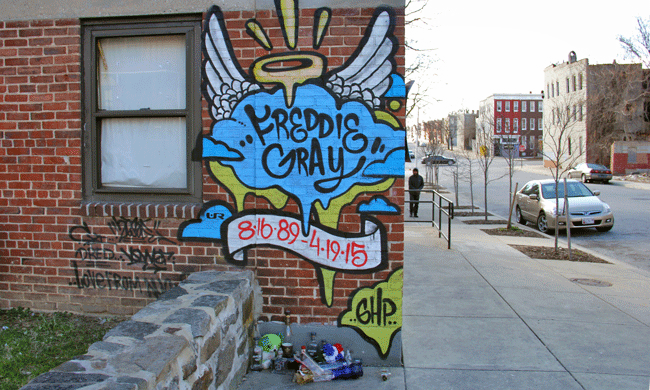
After Freddie Gray’s death, Baltimore photographer Devin Allen’s photo landed on the cover of Time Magazine. Today he’s teaching local youth how to use cameras to tell their own stories.
So how many people can the planet really support?
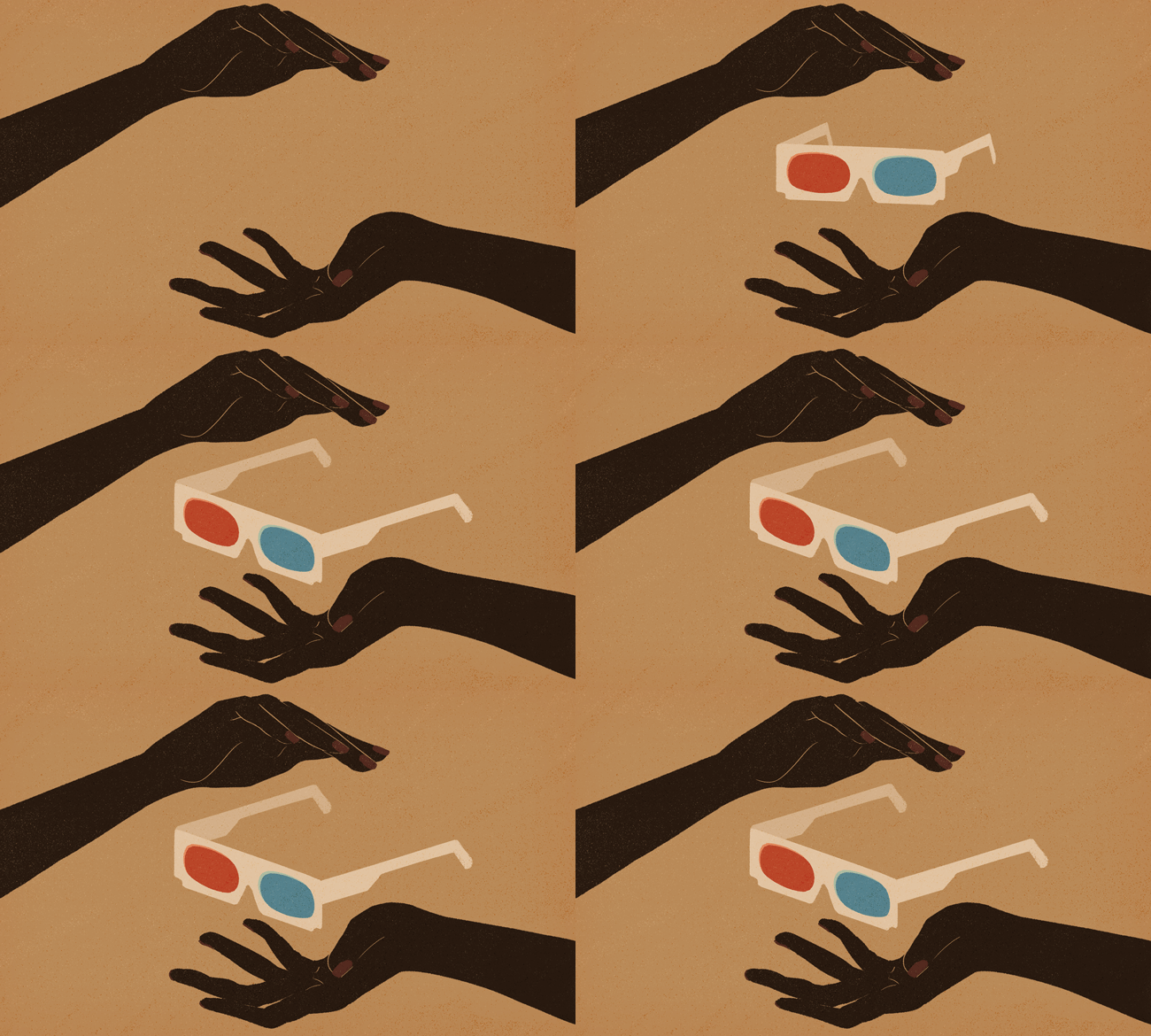
From a better hairbrush to modern 3D technology, ten things that might never have existed without the invention or innovation of black women.
Low-income communities continue to look for the best ways to improve their schools as the income gap grows across America.
After doctors realized their exam room reminded traumatized patients of torture chambers, they invited Buddhist monks and Cambodian healers to bring age-old therapies to the clinic.
How the city is promoting local economic growth that goes beyond deals for big companies.
“Nebraska” writer Bob Nelson on his new film and how economically depressed father and son characters are pulled from his own life story.
Twelve years ago, John Perkins published his book, “Confessions of an Economic Hit Man.” Today, he says “things have just gotten so much worse.”
The struggle for labor rights started decades ago among private household workers, mostly Black American women.
On April 11, thousands of marchers with Democracy Spring will arrive in the nation’s capital. It’s expected to be the largest civil disobedience action in decades.
Scientists aren’t the only ones who can solve problems like malnutrition—in fact, people who face hunger might be better at solving it.
The landmark deal between 27 First Nations, environmentalists, forest industry, and government preserves 85 percent of old-growth in one of the world’s great forests.
The new Nonviolent Cities project asks us to go beyond calls to end violence and instead create a pervasive culture of nonviolence.
A successful energy transition to renewables could not only rescue the planet but create a more just economy.
Our Vision to Create the Best Stories Imaginable
Our monthly newsletter uplifts relevant pieces from our archives and new solutions journalism from other publications.
LEARN MOREHelp Fund Powerful Stories to Light the Way Forward
Donate to YES! today.