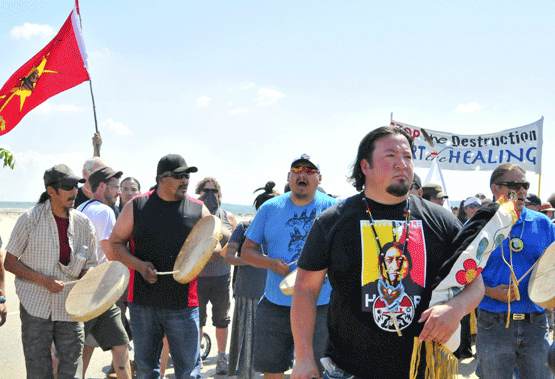
As climate change makes it more difficult to practice agriculture in their ancestral homelands, indigenous communities are exchanging seeds in hopes of finding the hardiest varieties.
The safety and security every Israeli and Palestinian child deserves can only come about if all children's rights are secured. Here are the people trying to make that happen.
The study highlights the story of Brazil, where increasing indigenous rights to the rainforest helped cut carbon emissions by 3.2 billion tons.
#YesAllWomen experience harassment—and often violence. I want to make sure it's #NotMySons behind it.
Librarianship may be shaped by the broader society, but it is also marked by opposition to a dominant commercial culture.
The momentum behind the legalization of gay marriage came from grassroots action, not from court cases.
Ashamed of the public rejection of children seeking refuge in the United States? Here’s what you can do about it.
What at first seemed like a disturbing reaction to an article was all about my kids finding something they could relate to in the story.
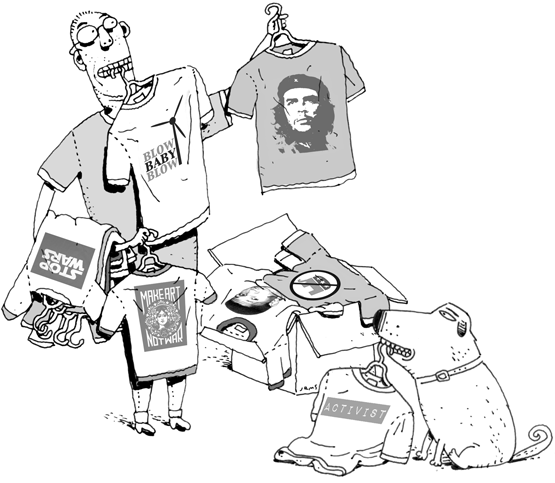
The messages may be eternal, but T-shirts aren't forever. These DIY projects can give them new life.
More than 60 counties, cities, and states—and some corporations—are reducing discrimination against former offenders by removing one small box from job applications.
We were sitting in a Seattle park, about to start a picnic, when Amer got the news.
The Appalachian Transition Fellows are young people who will spend this year building diverse job opportunities in the coal-country counties that need them most.
Breaking the Grip of the Fossil Fuel Economy: If It Can Happen in Appalachia, It Can Happen Anywhere
Coal production is gradually leaving Appalachia—having already extracted much of the region's natural wealth. Local people are figuring out how to build a new economy based on shared vision and community knowledge. If transition can happen here, it can change the debate everywhere.
Self-organized commons are undergoing a renaissance today as one of the most robust alternatives to modern-day capitalism.
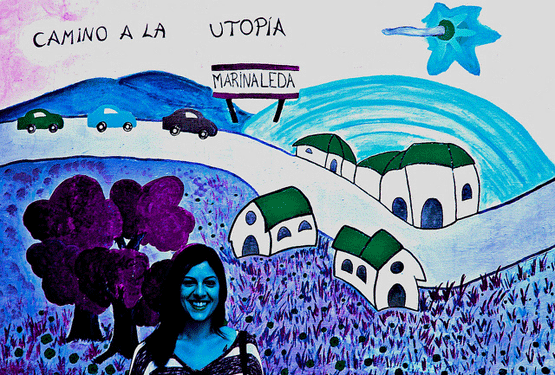
The town of Marinaleda, often called Spain's "communist utopia," is proof that an economy built on mutual aid is possible.
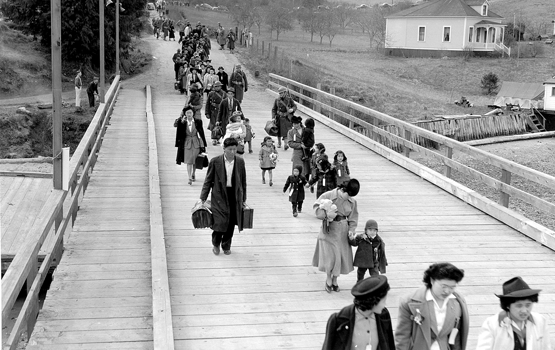
Many Japanese Americans were incarcerated in concentration camps during World War II. Densho is preserving their stories and the cultural knowledge that comes with them.
The Inner Harbor Water Wheel is proving to be an effective answer to the city's water pollution problem.
The city's mayor says the move will boost cycling in decades to come, creating a greener and more sociable city.
Mass annihilation is depressing, sure. But stories about it force us to imagine large-scale rebirth—and what kind of people we want to become.
Craftivism: “a way of looking at life where voicing opinions through creativity makes your voice stronger, your compassion deeper, and your quest for justice more infinite.”
Edward Burtynsky documents the environmental effects of oil extraction through striking landscape photography.
Two-thirds of the country’s low-wage workers are women. That’s why they stand to benefit the most from greater equity in and control of the workplace.
To get people on bikes in big numbers, cities are finding that it's essential to separate bike lanes from traffic.
Organizers agreed that the annual marches have helped raise awareness about the mining project. But their work is far from done.
When you ask Americans specific questions about the policies they support, it turns out we're not so polarized after all.
Our Vision to Create the Best Stories Imaginable
Our monthly newsletter uplifts relevant pieces from our archives and new solutions journalism from other publications.
LEARN MOREHelp Fund Powerful Stories to Light the Way Forward
Donate to YES! today.