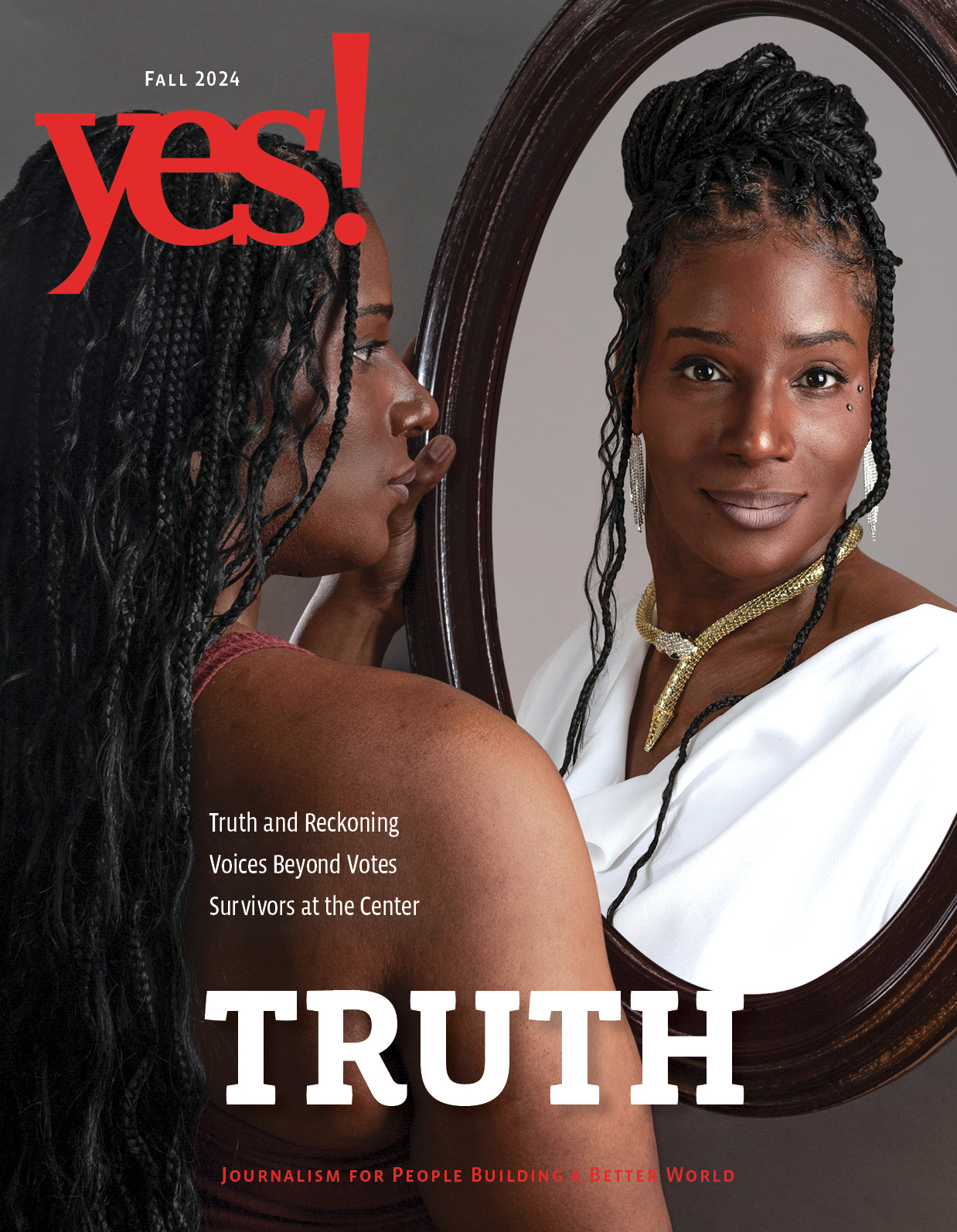


Many opportunities exist for collaboration between the movements for racial justice and for an economy that works for everyone.

Those who have suffered the most at the hands of an unfair economy are also the most experienced at imagining and building alternative futures.

Why did some of the cooperative institutions built in the ’70s—especially food co-ops—get to scale and thrive in subsequent decades, while others faded away?

“Our full humanity is expressed only when we have the capacity and the opportunity to be productive, to do for ourselves, meeting our needs in our communities.”

Next Monday, YES! and the New Economy Coalition kick off New Economy Week—five days of national conversation about the ideas, strategies, and projects that make up the movement.

The poverty rate in the U.S. would be 15 percent higher if not for the War on Poverty and government anti-poverty programs since 1967.

“Before I was on SNAP, I budgeted $50 a week for all groceries for my two children and myself. This was for food, shampoo, toilet paper, everything.”

In the evolving global economy, migrants facing virtual indentured servitude abroad—and coming home to debt and social isolation—feels like the new normal.

Brought on by the sound of a screaming child, I reflect on my past, my community, and how we can become our true selves without fleeing our roots.

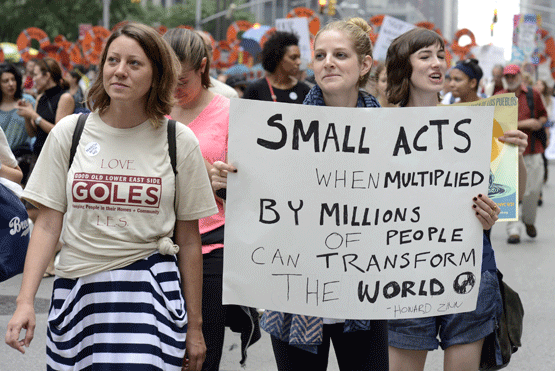
From people who are still literally marching to campaigns to sue the government for failing to take action on climate change, these projects make it clear that the People’s Climate March was just the beginning.

“We need to expand the civil-rights struggle to a higher level—to the level of human rights.”

In this interview, the founder of the Bioneers conference talks about what he’s learned in 25 years of bringing thinkers together.

Naomi Klein’s powerful new book explains why not only can the climate movement win—but it’s our best chance at overturning some of history’s greatest injustices.

Our experience strengthened our resolve to fight for housing as a human right.
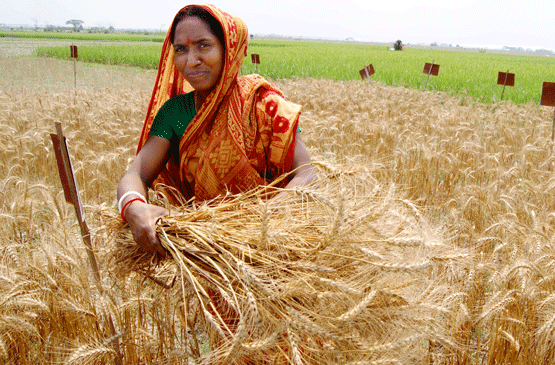
New scientific research increasingly shows how “agroecology” offers environmentally sustainable methods that can meet the rapidly growing demand for food.

There was more to #FloodWallStreet than a guy in a polar bear suit getting arrested. Here’s a gallery of lesser-known moments from the day’s events.

The farmers working to build West Virginia’s local meat economy know that their fate relies on the success of the entire local meat ecosystem.

A sustained one-percentage-point decline in the unemployment rate is associated with a 9.4 percent rise in the wages of workers in the bottom quintile of the wage distribution.

These projects show how everyday people can address violence in our own communities by breaking through the silence to interrupt abuse.
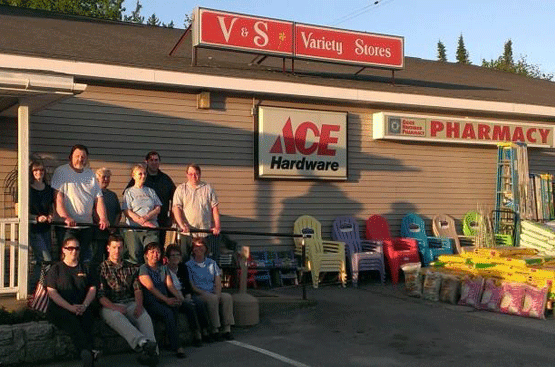
For the new worker-owners of the Island Employee Cooperative, the transformation into a co-op will create profound changes in their lives.
The leading strategies in the climate justice movement already resemble the Cold War policies of containment, roll-back, and isolation. But can they wear down the political power of the fossil fuel industry?

“Divest from fossil fuels and invest in a clean energy future. Move your money out of the problem and into solutions.”
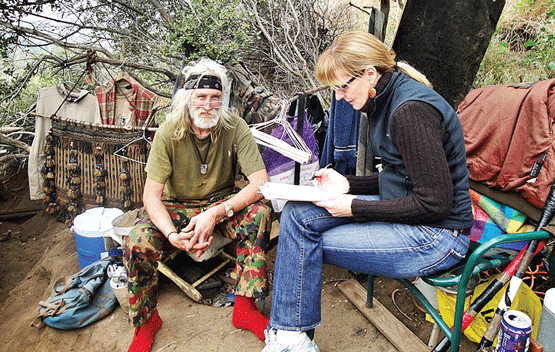
It's not hard to bring a little more equality into each others' lives.
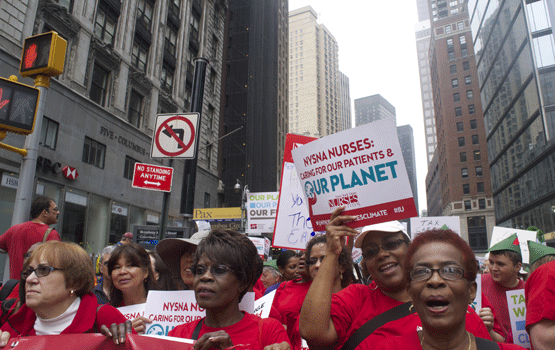
The nurses’ unions focus on health gives them a unique perspective on climate change among organized labor.

Our Vision to Create the Best Stories Imaginable
Our monthly newsletter uplifts relevant pieces from our archives and new solutions journalism from other publications.
LEARN MOREHelp Fund Powerful Stories to Light the Way Forward
Donate to YES! today.