From the Standing Rock Sioux to the Wounaan in Panama, indigenous communities are staking claims to traditional territories even when they no longer possess ownership rights.
The job growth that led us out of the recession has been in nontraditional jobs, and that's working well for women.
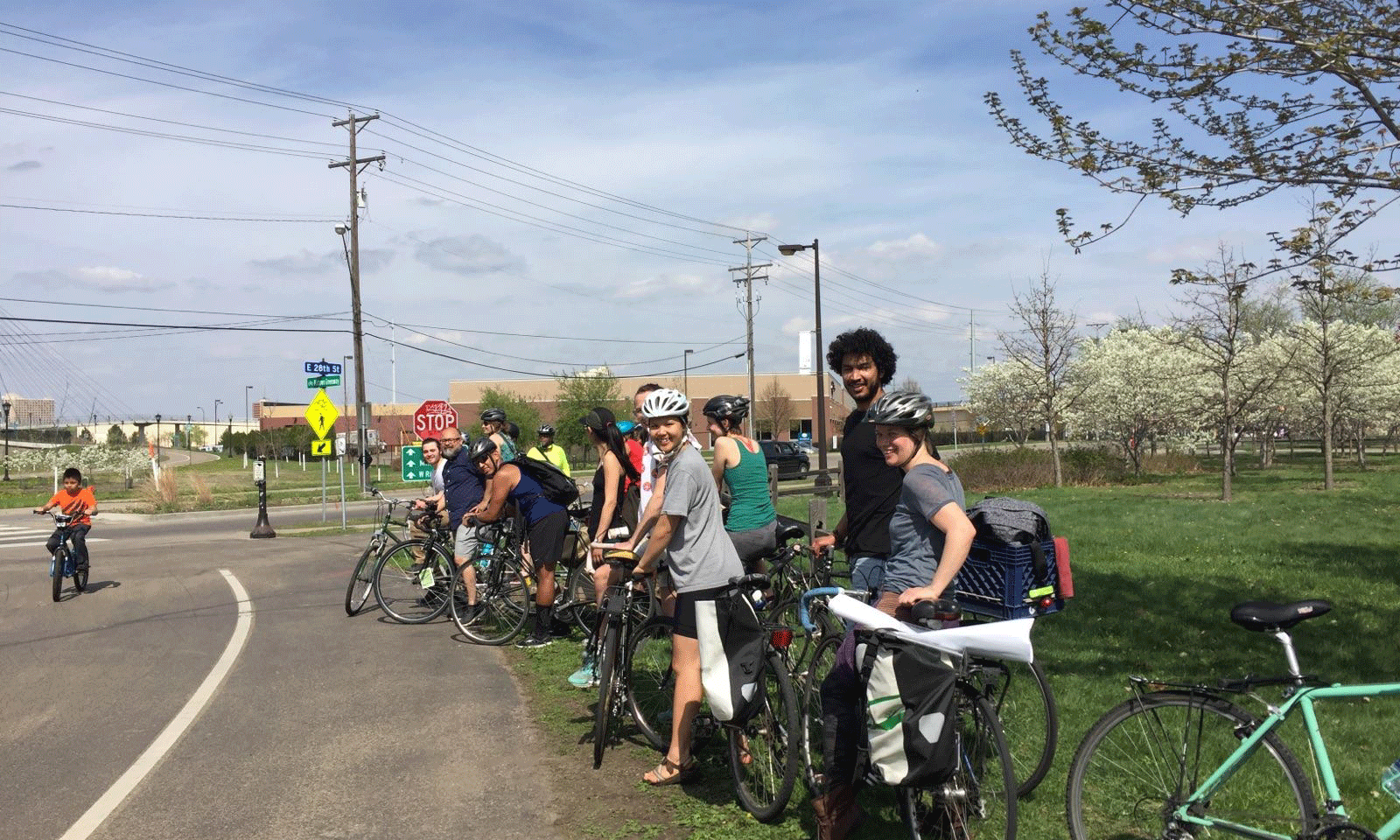
Bicycle equity for the Latino community of East Phillips means more than protected bike lanes—it means clean air.
The Good Work Code attempts to re-examine what workers and employers want and to build jobs around shared values.
Dallas Goldtooth, a veteran organizer of the Keystone XL fight, is amazed at the historic support from tribes at Standing Rock—even tribes that rely on resource extraction.
How to deal with anxiety, self-doubt, and “the check’s in the mail.”
After the pipeline decisions, many at the protest site wonder whether future generations will look back on this as a turning point in U.S.-tribal history.
The illusion of victory is a dangerous thing. We could undo what we have built at Standing Rock, this unprecedented act of Native American collective resistance.
Campaigns are a tactic, like protests and boycotts, and the trick is to use them wisely, not to prove how good you are.
Celebration and solidarity as hundreds of tribes unite behind the Standing Rock Sioux’s opposition to the Dakota Access pipeline.
Sixteen years ago, Arizona stripped state lawmakers of the right to draw electoral districts. Many lawsuits later, democracy is stronger—in some ways.
The Department of Justice promised “meaningful tribal input” on pipeline decisions and the protection of tribal lands, resources, and treaty rights.
The Nixon White House managed three Indian occupations. There are lessons for President Obama there—if he would just pay attention.
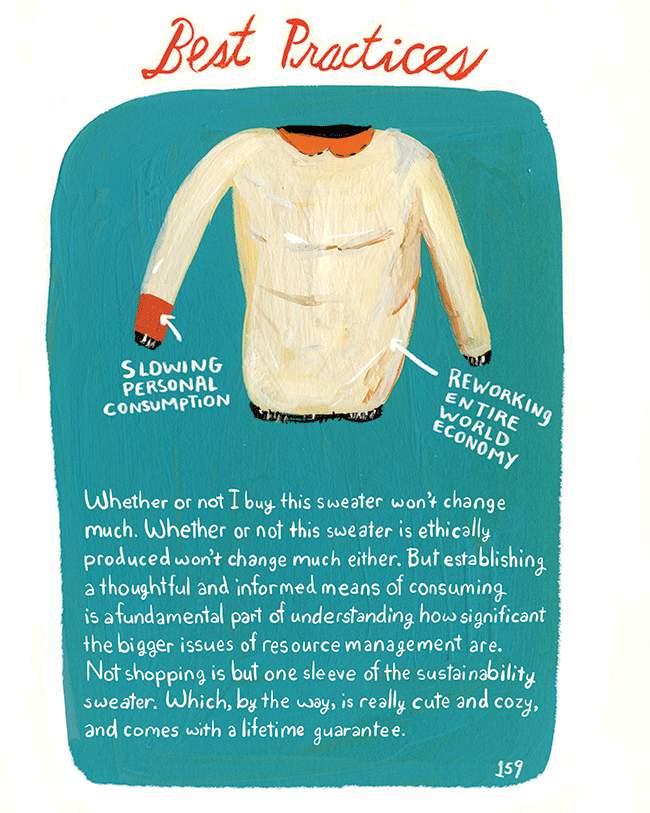
Instead of buying the items she coveted, this artist made paintings of them. Here’s what she learned after a year of not shopping.
From the “buy local” movement to public banking, we’re well on our way to a more democratic, cooperative, and people-centered economy.
If we can recognize our destruction of other animals’ habitats, perhaps we can recognize our destruction of all the living systems on which we depend.
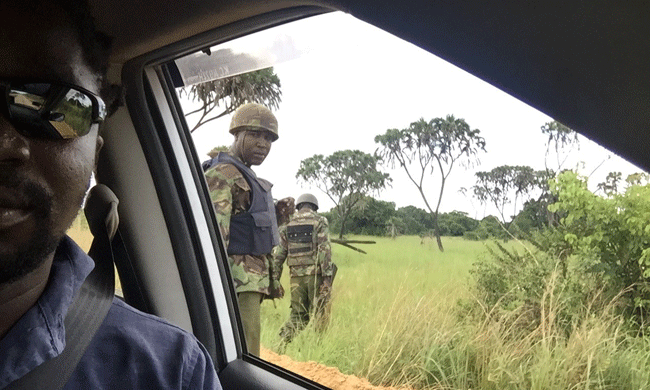
As glaciers disappear, fish are expected to follow. But the Nooksack tribe of Washington state has a plan to keep nearby rivers and streams cool.
As Detroit’s public schools fight to stay afloat, Black families turn to a civil rights-era approach to education.
There is a profound sense of community born from the gathering of people and the exchange of goods at a market.
For the past year, the Food Literacy Project in Louisville, Kentucky, has sent its garden-on-wheels to local food deserts, connecting people to healthy eating and changing the lives of young people.
Sometimes it seems that the world is responding to violence only with violence, but there are other possibilities.
We must remember we are part of a larger story. We are still here. We are still fighting for our lives on our own land.
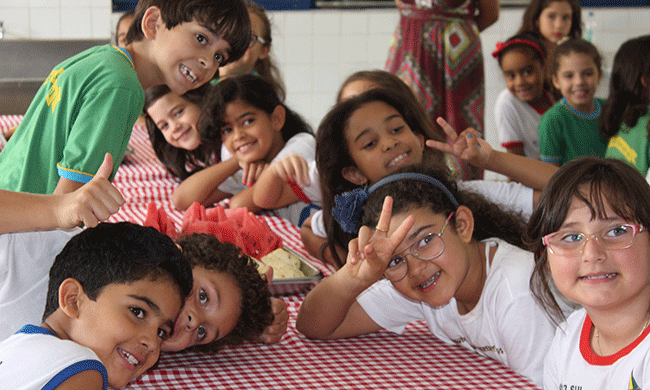
Emphasizing local food under a radical policy of “zero hunger,” Brazil’s school lunch initiative helps small farmers buy the land they’ve been farming for generations.
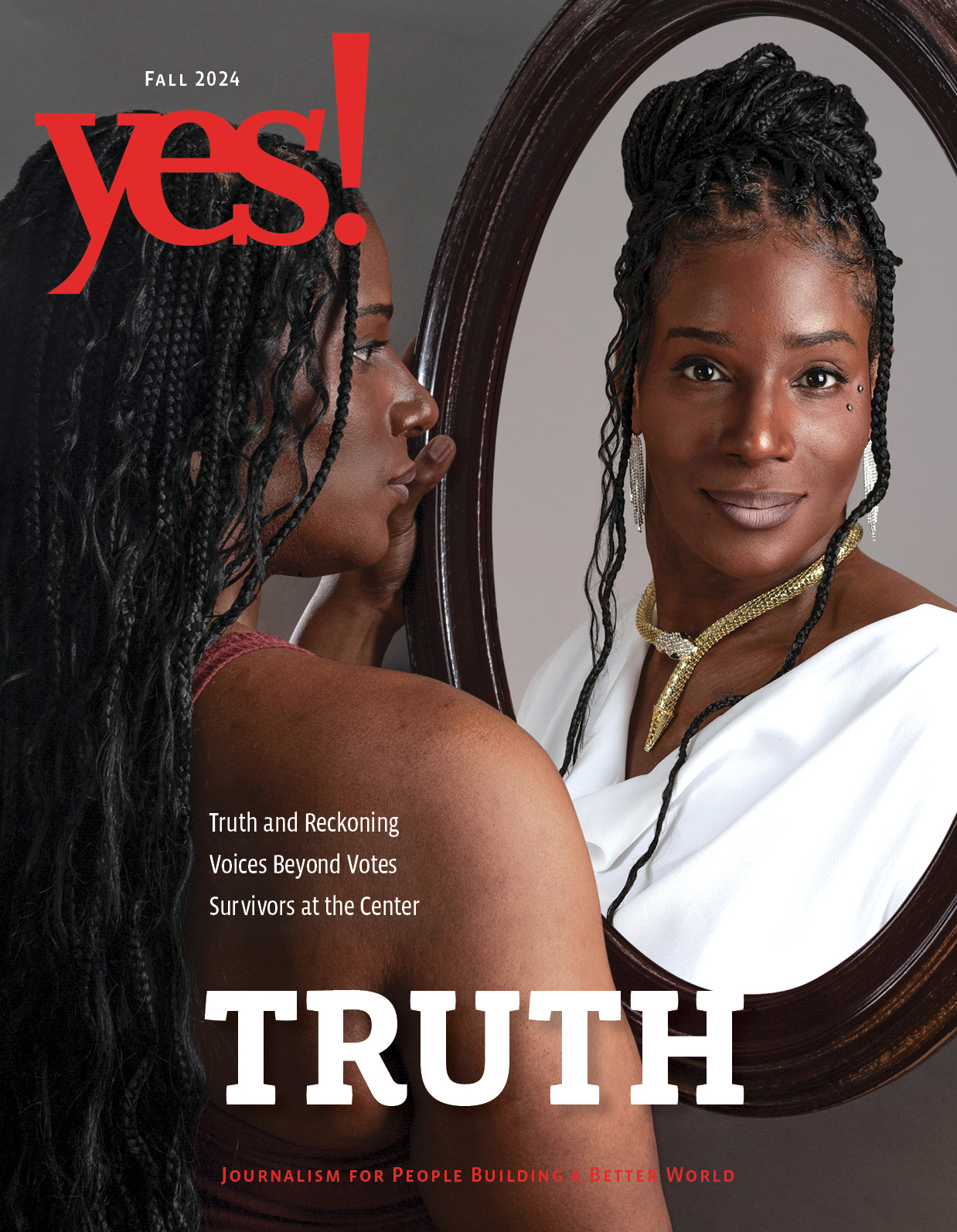
Better education and loan forgiveness are key strategies to address disparities for Black communities and their next generations.
Misdirected public outrage over the killing of a Washington wolf pack may do more harm than good.
Our Vision to Create the Best Stories Imaginable
Our monthly newsletter uplifts relevant pieces from our archives and new solutions journalism from other publications.
LEARN MOREHelp Fund Powerful Stories to Light the Way Forward
Donate to YES! today.