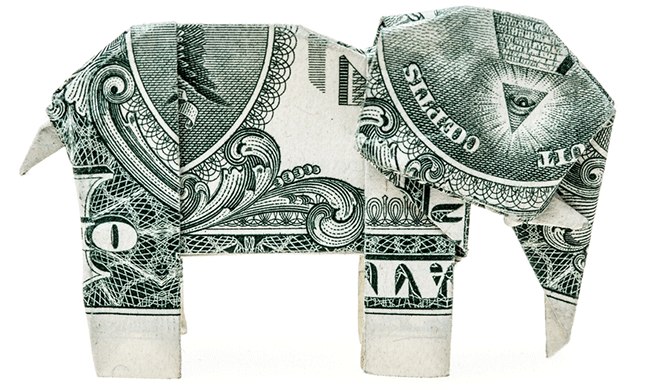

The $66 billion sale of Monsanto is yet another reminder of how corporations have colonized the world and subverted democracy. To regain our future, we must claim our right to popular sovereignty.

The #WeAreTwitter movement wants users to buy Twitter as co-owners and show Wall Street how a business should be run.
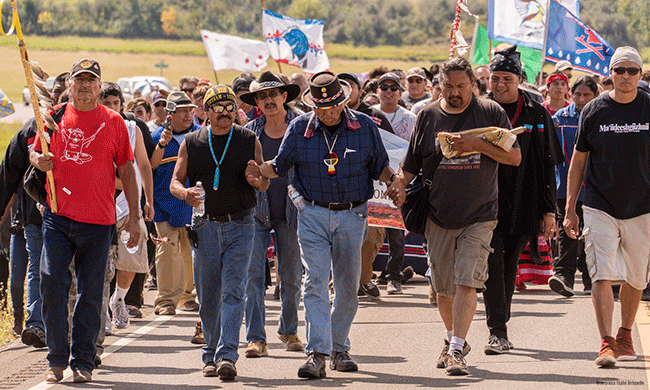
Some of the biggest unions have denounced the water protectors. But critical voices have been missing from the conversation: those of indigenous union members themselves.
We need to overhaul America’s social safety net, which was designed for a different labor market and economy.
Thanks to an ordinance passed last month, service and retail workers will finally get reasonable shift schedules, along with their $15-an-hour minimum wage.
After activists launched a strike shutting off the flow of tar sands oil across the U.S. this week, a movement leader calls for more faith-based direct action.
The next Standing Rock is the Longview Millennium coal export facility. Water protectors know coal dust is like a pipeline accident that happens daily.
We must build a movement for trade justice that rejects both Trump’s opportunism and the long-standing neoliberalism of the major political parties.
Ranked-choice voting is catching on, and Maine might become the first state to help citizens vote for candidates they actually want.
Four reasons communities all over the country are winning against the powerful and extremely wealthy fossil fuel industry.
Instead of addressing the roots of drug addiction, mental illness, and poverty, we’ve come to accept policing and incarceration as catch-all solutions. It’s time for a change.
What today’s workers can learn from day laborers and domestic workers about job security, health benefits, and retirement.
For years, Congress has been pressed to permanently protect the Arctic National Wildlife Refuge. Will today’s Indigenous-led climate movements finally seal the deal?
Natives and non-Native water protectors have found room in this movement for their passions, from traditional wisdom to direct action against fossil fuels.
What if we defined wise spending in terms of the happiness that it brings? Research shows certain spending can bring us closer to others.
An unregulated Uber has helped to create an economy where part-time, low-wage, on-demand work is the new norm. Should Europe really follow suit?
The documentary Occupy the Farm shows the positive impact universities could have if they leveraged their resources to create more farms and farmers.
After industry and greed destroyed my life in northern Pennsylvania’s Marcellus shale fracking country, I knew I needed to stand with the water protectors.
Paris agreements take effect November 4, and the climate change math shows we need a managed decline of fossil fuels in the U.S. That means no Dakota Access pipeline.
What is the most important—yet neglected—issue in the political debate? Hint: It isn’t the ideal body weight of Miss Universe. Part 1.
Author Jeff Chang talks about Trumpism, Whiteness, and cultural equity in his new book, “We Gon’ Be Alright.”
A member-led cooperative structure empowers Black workers as they navigate challenges like discriminatory hiring practices and high incarceration rates.
We were water beings from the beginning. The river was our Grandmother and supplied everything we needed to survive.
When the school district pulled out, parents at a Eugene, Ore., charter school stepped in to reinvent how lunch is done.
Local transportation planning could be missing the mark for women cyclists. Here are 6 ways to change that (for everyone).
Our Vision to Create the Best Stories Imaginable
Our monthly newsletter uplifts relevant pieces from our archives and new solutions journalism from other publications.
LEARN MOREHelp Fund Powerful Stories to Light the Way Forward
Donate to YES! today.