The Great Growth Con promises that economic growth—measured by gross domestic product—will benefit everyone, rich and poor alike.
We represent nonpartisan, independent journalism. Even in the darkest times, you can depend on us to report on solutions that can heal the planet and improve the lives of the many.
The election divided the year into “before” and “after.” But there remain signs of hope for 2017.
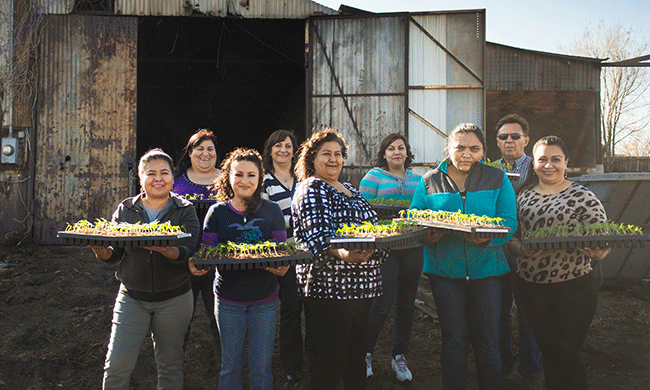
Three creative ways to strengthen local food economies.
Continuing to shrink our oil consumption is one way to challenge the oil uber alles mentality of the Trump administration.
Nearly one in six properties across the city faced tax foreclosure in 2015. Land trusts are one way to keep buildings affordable.
The Thai Community Development Center has played a part in some of the most notorious human-trafficking cases in the United States. But unlike other groups, it also helps workers post-liberation.
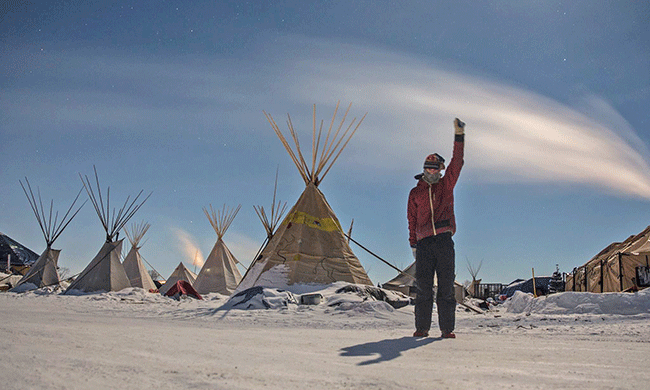
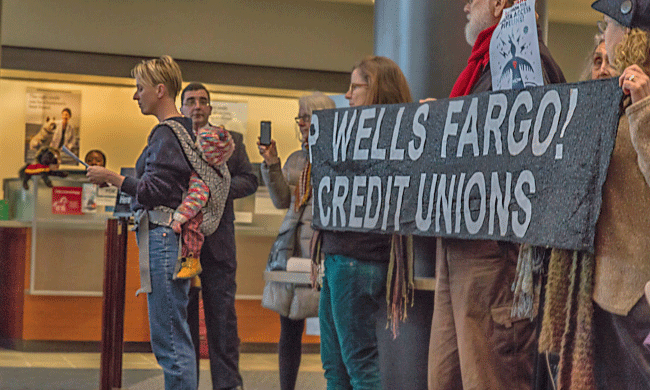
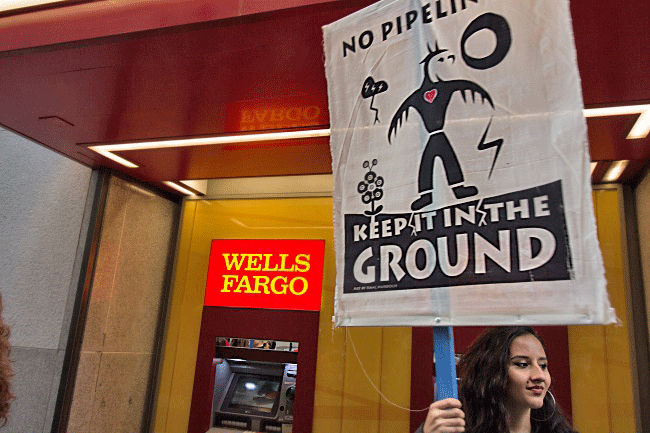
Public and consumer pressure on banks to quit financing the Dakota Access pipeline companies is producing results.
Time is running out for Obama to say no to Big Oil and permanently protect the Arctic National Wildlife Refuge—and the people who depend on it.
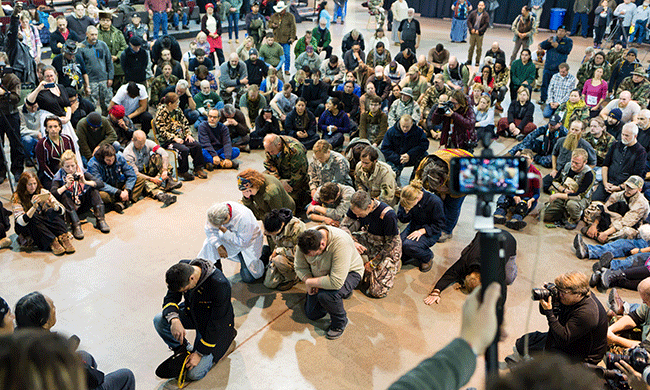
“We fought you. We took your land. We signed treaties that we broke … But we’ve come to say that we are sorry.”
We can’t count on Republicans or Democrats to save us. Instead, we are the ones to build the world we want, starting in our communities.
Three years ago, they started a program to keep salvageable goods from landfills by harnessing the community’s collective skills to fix them.
To protect vital wetlands, the Ojibwe tribe and local scientists and activists pressured industry to abandon plans for what would have harmed thousands of species of plants and animals.
Federal recognition offers financial help, and those tribes without it have “second-class status in Indian Country” and remain vulnerable to local authorities.
Florida’s Miccosukee is the first tribe allowed to run its own school, where students fully participate in family and cultural activities.
There’s an argument to be made that progressives are lucky Bernie Sanders didn’t win the nomination.
The landscape of these indigenous-led kitchens that feed thousands of water protectors is dynamic, much like the ad hoc camps that depend upon them.
As banks begin to respond, environmental movements are learning the importance of speaking clearly about the financial risks of fossil fuel investment.
In an industry usually focused on medicine and procedures, a Philadelphia-area hospital decided what its patients needed was a farm and advice about food.
The proposal will be voted on next month and could have broader implications to ensure the city partners with socially responsible businesses.
We've been pitted against each other for too long. Now is the time to come together to fix our corrupt political systems.
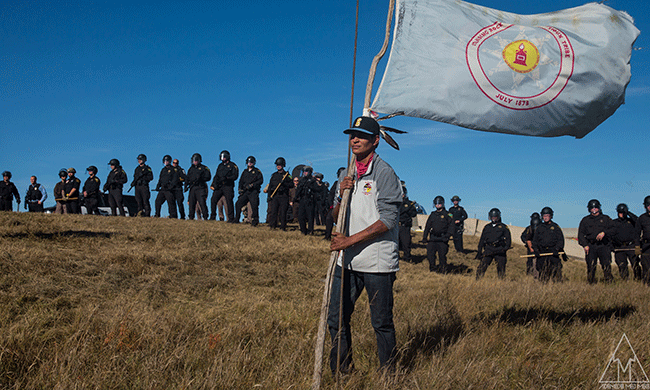
The nation’s only state bank was created to empower small farmers and local economies, but now it’s being used to silence indigenous people with militarized force. How did this happen?
The documentary “We the People 2.0” looks at why the rights of neighborhoods and cities are essential to building a better world.
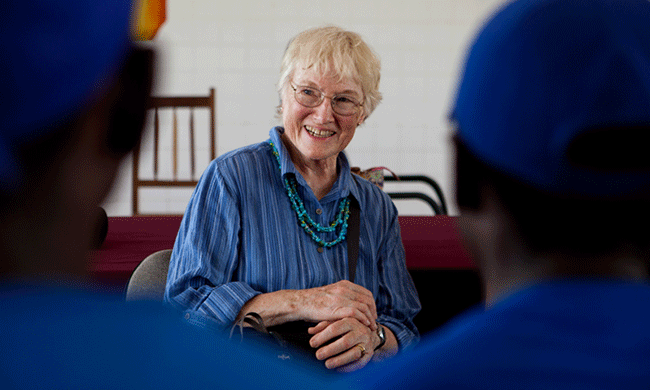
And two other grandmas we love expanding health care in their communities.
What We the People lost when the Constitution gave monarchical power to a small band of unelected people in robes.
Our Vision to Create the Best Stories Imaginable
Our monthly newsletter uplifts relevant pieces from our archives and new solutions journalism from other publications.
LEARN MOREHelp Fund Powerful Stories to Light the Way Forward
Donate to YES! today.