This thriving new sector is a critical step toward a fair and vibrant economic future.
Aloha allows us to always have a commonality, regardless of our politics or gender expression.
A former inmate’s resource guide is now helping others released from jail find their way back into society.
More than a century ago, the last fluent speakers of Wôpanâak passed away. Now this school is working to revive the language.
Not many things matter more to our health than a good night’s sleep, but fewer and fewer of Americans are getting one.
Why Planned Parenthood’s Cecile Richards believes that now, more than ever, women are the most important political force in America.
Here’s where your tax dollars go (and who isn't paying taxes at all).
Why you shouldn’t ask about sleep, weight loss, or breastfeeding. But especially sleep.
Enter your ZIP code into the Native Lands App and an interactive map will tell you the area’s original language and tribal ties.
In New York state, a writing and performance program helps people of color share their stories as a pathway to empathy and healing.
Current trade agreements are great at creating more billionaires, not so much at protecting the interests of workers.
“Indigenous peoples were always scientists. Their lives depended on it."
This radio story was produced by KBCS in partnership with YES! Magazine.
Mothers who experience toxic stress in childhood are more likely to have gestational diabetes and hypertension. But they can benefit from the right supports.
Where is the clear image of a decolonized society we are to emulate? There isn’t one. Yet if we are to free ourselves, we need practical steps.
Step one: Please stop arguing with people of color about what is or isn’t racist.
Where local governments collaborate with ICE, deportations have increased more than 75 percent. New Mexico shows a different way.
For too many women, deciding whether to stand up to harassment at work is a choice between earning enough tips to put food on their tables or not.
The ancient history of this country is often overlooked. Here are landmarks significant to Indigenous people that were renamed by white settlers.
Let’s re-experience our homelands the way our ancestors did and regenerate that culture.
This radio story was produced by KBCS in partnership with YES! Magazine.
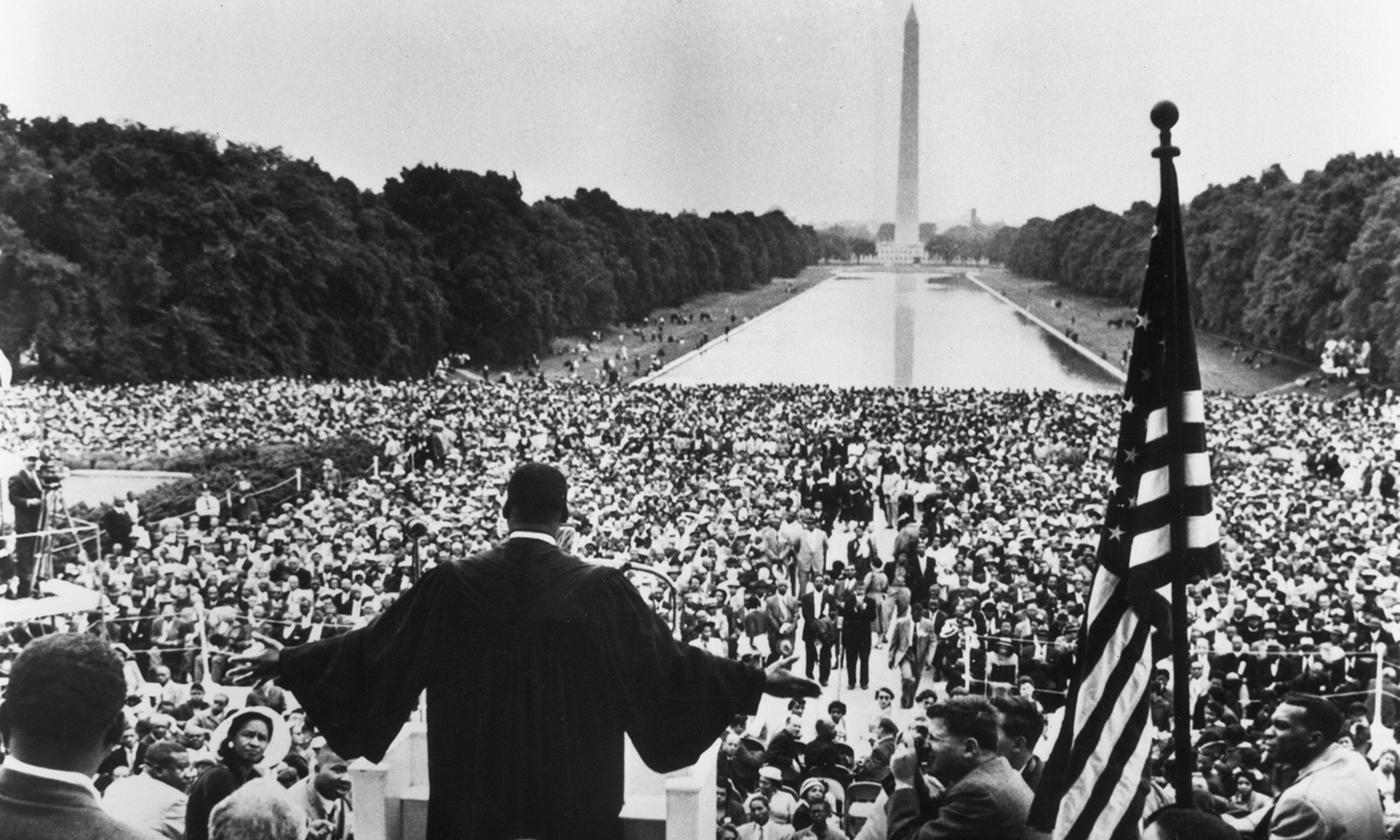
The civil rights icon saw economic issues to be intertwined with racial justice. Today’s globalized economy makes justice that much harder to achieve.
Send us your leads and pitches by May 1.
The prevalence of food-related disease among indigenous people, like members of the Tohono O’odham Nation, is glaring—and drives many of the city’s food justice efforts.
The data suggest that today’s young people are losing faith in capitalism—and ready to embrace something much more fair.
Our Vision to Create the Best Stories Imaginable
Our monthly newsletter uplifts relevant pieces from our archives and new solutions journalism from other publications.
LEARN MOREHelp Fund Powerful Stories to Light the Way Forward
Donate to YES! today.