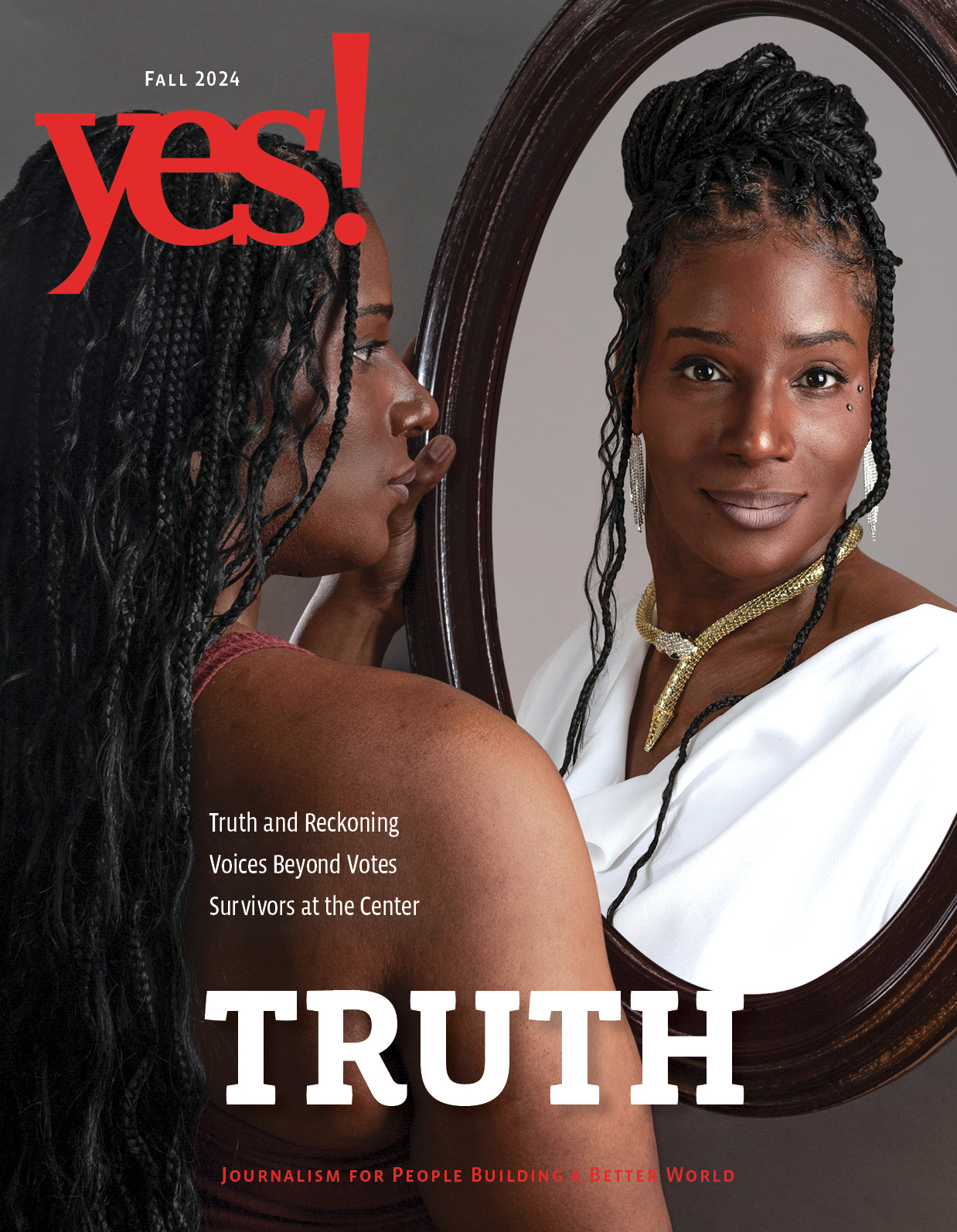
Survivors discover surprising benefits in the process of healing from a traumatic event.
A non-Native journalist encounters a tribal-managed forest and an indigenous garden. “I had no idea how to use the English language to describe what I was seeing.”
Tunde Wey’s dinner series-slash-public art project raised $50,000 to address Nashville’s affordable housing crisis.
With all due respect to The Guardian’s economics editor, our planet will not be saved by capitalism.
Thousands of drug users across the country signed their names to a sort of last will and testament, requesting that prosecutors not file homicide charges against their loved ones.
An 11-year-old social media celebrity collects thousands of encouraging letters from around the globe to remind her Flint schoolmates they are not forgotten.
Here’s how indigenous leaders pulled together a grassroots movement to resist the pipeline expansion.
While we debate abortion, women are dying in childbirth.
These farmworkers created an organic co-op that guarantees fair wages and healthy working conditions while preserving indigenous heritage.
On the anniversary of the March on Washington, we revisit an interview with the musician and civil rights activist about his anthology of Black music.
With self-directed education, students become their own teachers. But the biggest learning curve may be for parents.
This outdated, gender-specific, and illogical phrase is disrespectful and avoids the real issue.
Returning to culture is a duty my grandfather believed Native elders had to their communities. He passed this on to me, along with his trauma.
More and more people are looking beyond the ordinary for ways of building that express their creativity and values.
A new book digs into the paradoxes of American Indian diets most people don’t know.
Barbers in the South are training as first responders to assist the men in their chairs with their mental health concerns.
To protect our democracy, Congress must value the Constitution over partisan politics.
From action-oriented toolkits to talk therapy and meditation, these responses facilitate recovery, hope, and activism.
Entrepreneurs have limited access to capital and business education on the reservation. A Navajo incubator wants to change that.
The unconventional children’s television pioneer celebrated dignity and kindness in the age of mass media.
My beautiful older sister, Bess — a smart, passionate, popular soccer star — killed herself when she was 17. She took my parents’ gun, drove to a park, and shot herself in the head. The effect on my family was profound. Though I’m generally a warm person, for the next 15 years, I avoided people with big emotions, or people who seemed fragile. For me, they were dangerous, unpredictable, unhelpable. I didn’t want to get too close, for fear of being responsible for them in some way. I limited my range of empathy because I was sure if I went too far, I’d be swallowed whole.
A growing number of communities have implemented municipal identification programs, and not just in politically progressive areas.
Our mental and physical well-being suffer from the sonic overload of modern life.
A mostly female crew constructs a village of emergency shelters in north Seattle, and finds camaraderie along the way.
A review of the documentary “The Food Cure,” which follows patients undergoing an intensive and controversial nutritional therapy.
Our Vision to Create the Best Stories Imaginable
Our monthly newsletter uplifts relevant pieces from our archives and new solutions journalism from other publications.
LEARN MOREHelp Fund Powerful Stories to Light the Way Forward
Donate to YES! today.