Medellín went from being ground zero of Colombia's drug war to UN poster child for urban equality—and the people made it happen, by designing the city they wanted.
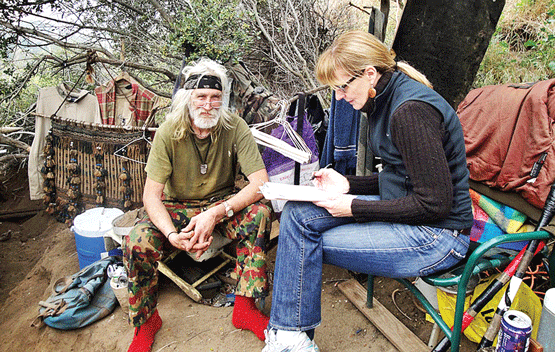
“As we found ourselves choosing between rice, oatmeal, or potatoes for every meal, it occurred to us that being in poverty isn’t about how hard you work; it’s about how much money you make.”
Years of Living Dangerously features celebrity correspondents who thoughtfully explore how politics and religion divide people and impede action on this critical issue.
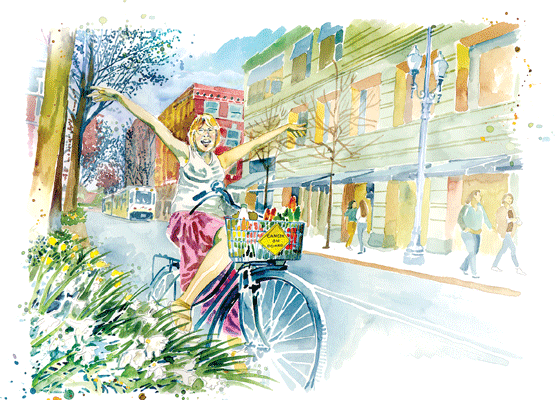
Many more patients are now living for years with the diagnosis of terminal illness. The author describes her journey to what she calls “livingly dying”—facing her death by living in the moment with grace and mindfulness.
A sustained one-percentage-point decline in the unemployment rate is associated with a 9.4 percent rise in the wages of workers in the bottom quintile of the wage distribution.
The movement to persuade schools to divest from fossil fuels has taken off around the country. Meet a few people who helped get Stanford’s money out of coal.
The work of activism is full of messy contradictions. In “Towards Collective Liberation,” Chris Crass breaks down the influence of racism and patriarchy, including helpful how-tos—like “Twenty Careful Steps Toward Anti-sexist Action.”
In Mora County, New Mexico, corporations seeking fracking contracts came up against “querencia”—a traditional way of thinking about and defending the land.
Nick Hanauer, venture capitalist and self-described “plutocrat,” says a healthy economy and an effective democracy depend on a thriving middle class of workers.
A new bill provides two years of tuition at a community college for participating high school grads who might otherwise face a 7.5 percent unemployment rate—and other states are already following suit.
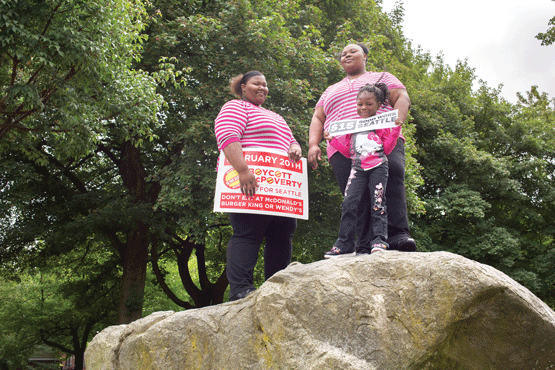
Seattle's path to a $15 minimum wage is a winding tale of effective organizing, smart messaging, and blind dumb luck. It is also a roadmap for bypassing partisan gridlock—one city at a time.
In Germany, auto workers get paid well and their companies still profit. Author Thom Hartmann on why living wages and corporate success don't have to be mutually exclusive.
Meanwhile, more Americans got insured, the oceans continued to become more acidic, and the world’s largest collection of rubber ducks grew at a rapid pace.